

Welcome back, Senior Friends! Today we’re talking about plant proteins as an alternative to the ever-increasing costs of meat proteins.
I grew up with family meals almost always having a vegetable plus a salad, a starch (usually potatoes), and some kind of meat. Pretty well balanced, right? Sure! But for a family of eight, it was pretty expensive to have meat seven days a week, so we occasionally had meals based on some kind of bean dish, to stretch that budget. A very effective budget reliever, of course, but our knowledge of plant-based proteins was limited, and so the options were, too. It got boring for us kids, and so it was only very occasionally.
Today, I prepare a meat-less meal weekly, with plans to extend that to two days per week, then three, over the next few months. At this time, I have no plans to go vegetarian or vegan; I just want to decrease my grocery bill without sacrificing nutrition. That’s a great goal, and if you want to stretch your grocery budget, too, here’s the why and how of it.
First, What is Protein?
Protein is a macronutrient (nutrients needed in large [macro] quantities) made up of 20 amino acids in nearly endless combinations. Nine of these amino acids are called “essential” amino acids - meaning they cannot be manufactured by our bodies and so we must provide them to our bodies through food. The other 11 are considered “nonessential” because our bodies produce them. Foods containing some, but not all, amino acids are called incomplete proteins, which means you’ll need at least two foods with complementary amino acids to create complete proteins. Examples of this are beans and rice or cornbread and (meat free) chili. Often, a combination of legumes and grains is all you need to have a plant-based complete protein. And legumes and grains are much more affordable than most meats. Meats, fish/seafood, eggs, and dairy are complete proteins on their own.
While meat and fish/seafood are relatively expensive, eggs and dairy are pretty affordable - a good “bang for the buck.” There are plant food items that are complete proteins. Soy products (edamame, tempeh, tofu) are in this category, as well as some grains/pseudo-grains (quinoa, amaranth, buckwheat) and some seeds (chia seeds, hemp seeds).
So if your food budget is tight, you may benefit from eating meat-free one, two, or more meals per week. If that’s a change for you, start slowly. Maybe have “Breakfast for Dinner” once a week. When that’s a habit, add a plant-based meal per week, maybe a Mexican-inspired meal with beans and rice instead of meat, or a nice stir-fry with tofu, and so on.
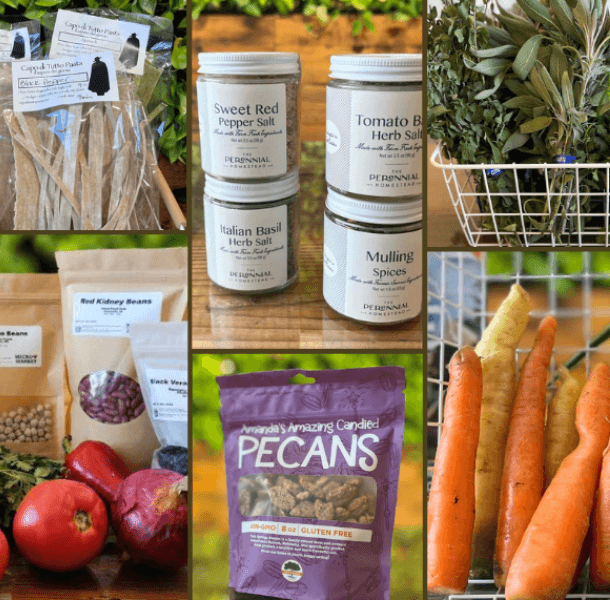
Taking meat out of your meal rotation once or twice per week, or even more often, will save a good chunk of your grocery budget, which you can then spend on a nice variety (by color) of veggies to enhance your meals and nutrient intake. We call consuming a wide variety of colors in veggies “eating the rainbow.” Eat the Rainbow weekly to be assured that you’re getting all the micronutrients your body needs. And when you take good care of your body’s nutritional needs, your body will thank you by taking care of you in return. Enjoy!
Meet Your Author
Cid Kelley, an Omaha native, is a Community Education Assistant at No More Empty Pots and a lifelong learner, too. Food Preservation is her latest learning mission; she says "nothing beats gifting and cooking with home-canned foods!" Cid's other passions include creating/providing adventures for 16 grandies, and living a life of healthful abundance with her partner, Will B, and their little dogs.
Comments? Questions? Email education@nmepomaha.org. We'd love to hear from you!