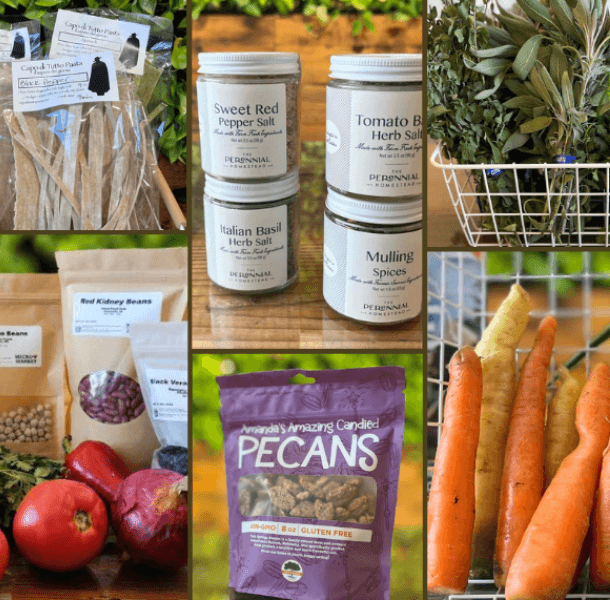

This week's CSA features a root veggie that isn't exactly the most recognizable vegetable, the Sunchoke or "Jerusalem Artichoke" grown by the best at Benson Bounty in Omaha, NE - visit their awesome website here. Even though the sunchoke is indigenous to North America and is a relative of the favorite Sunflower, we don't often see the Sunchoke on our local menus. Not from Jerusalem or technically an artichoke, the sunchoke is closer to potatoes and have been used for centuries and today we are going to learn the nooks and crannies of this native veggie.
Sunchokes or “Jerusalem Artichoke”
What’s in a name?
Despite its name, the Jerusalem artichoke has no relationship to Jerusalem, and it is not a type of artichoke, though the two are distantly related as members of the daisy family. The most probable explanation is that Italian settlers in the United States called the plant “girasole,” the Italian word for sunflower, because of its familial relationship to the garden sunflower (both plants are members of the genus Helianthus). Over time, the name “girasole” was corrupted by English-speakers to “Jerusalem.” Various other names have been applied to the plant, such as the French or Canada potato, topinambour, and lambchoke. Sunroot is a literal translation of the Virginia Algonquian term “kaishucpenauk” reported in 1588, this naming is similarly reflected in Ojibwe as giizisoojiibik.
Sunchoke, a name by which it is still known today, was invented in the 1960s by Frieda Caplan, a produce wholesaler trying to revive the plant's appeal.
The artichoke part of the Jerusalem artichoke's name comes from the taste of its edible tuber. Samuel de Champlain, the French explorer, sent the first samples of the plant to France, noting its taste was similar to that of an artichoke.
https://en.wikipedia.org/wiki/Jerusalem_artichoke
History
Sunchokes were first cultivated by the Indigenous peoples of the Americas, though the exact native range of the species is unknown. Genome analysis has ruled out the common sunflower (also originating in the Americas) as an ancestor, and instead points to hybridization between the hairy sunflower and the sawtooth sunflower.
The French explorer Samuel de Champlain discovered that the native people of Nauset Harbor in Massachusetts had cultivated roots that tasted like artichoke. The following year, Champlain returned to the same area to discover that the roots had a flavor similar to chard and was responsible for bringing the plant back to France. Sometime later, Petrus Hondius, a Dutch botanist, planted a shriveled Sunchoke tuber in his garden at Terneuzen and was surprised to see the plant proliferate. Sunchokes are so well-suited for the European climate and soil that the plant multiplies quickly. By the mid-1600s, the Sunchoke had become a very common vegetable for human consumption in Europe and the Americas and was also used for livestock feed in Europe and colonial America.The French were particularly fond of the vegetable, which reached its peak popularity at the turn of the 19th century. The Sunchoke was titled 'best soup vegetable' in the 2002 Nice Festival for the Heritage of French Cuisine.
The French explorer and Acadia's first historian Marc Lescarbot described Sunchokes as being "as big as turnips or truffles," suitable for eating and taste "like chards, but more pleasant." In 1629, the English herbalist and botanist John Parkinson wrote that the widely grown Sunchokes had become very common and cheap in London, so much so "that even the most vulgar begin to despise them." In contrast, when they had first arrived in England, the tubers had been "dainties for the Queen."
Lewis and Clark ate the tubers, prepared by an indigenous woman, in modern-day North Dakota.
They have also been called the "Canadian truffle".
https://en.wikipedia.org/wiki/Jerusalem_artichoke
Cooking and enjoying the Sunchoke
The sweet-nutty-crunchy qualities of sunchokes can be put to good use in an amazing number of ways. They are even delicious raw… For eating sunchokes raw, you can leave the skin on, but for cooked preparations you may consider removing the skin with a swivel-blade peeler or paring knife (the skin tends to toughen when cooked). Raw sunchokes also make nice toss-ins to salads, and are crunchy enough to be made into slaw. They can be sliced and roasted like potatoes, sautéed or made into a delicious gratin. The French are famous for a creamy sunchoke soup, but the tuber is also good simply pureed (peel first) and mixed with cream and butter, like mashed potatoes.
Sunchokes oxidize when exposed to air, just like apples or potatoes. To prevent this, toss with lemon juice before cooking. There are a bunch of other fascinating tips for preparing sunchokes here, including a pointer about preventing sunchokes from turning gray when pureed or made into soup (their high iron content causes this to happen): add a pinch of cream of tartar or an acidic liquid (like lemon juice) to the sunchoke cooking water.
Nutrition
Sunchokes are a great source of iron, potassium and thiamin. They are also low in calories and high in fiber. Inulin, the primary carbohydrate in sunchokes, minimally affects blood sugar and is touted as a diabetic-friendly carb.
Recipe: Sunchoke Soup
Ingredients: Sunchokes, potato, baking soda, bacon (can be substituted with oil and paprika for vegetarian option), garlic, vegetable or chicken stock, black pepper, chives
Instructions: Peel the Sunchokes with a vegetable peeler, placing them in a bowl of cold water as you go to prevent oxydation. Don't worry about getting all the skin off; it doesn't matter if tiny patches remain in hard-to-reach nooks. Peel the potato as well.
Rinse the Sunchokes and potato, cut them into chunks and place them in a medium saucepan. Cover with cold water, add the baking soda, and bring to a simmer over medium-high heat. As soon as the water simmers, remove from heat and reserve in the cooking water.
While the vegetables are heating up, place a soup pot over medium heat. Add the bacon and cook until browned. A minute before the bacon is entirely browned, add the garlic and cook for a minute until softened, stirring frequently to avoid coloring.
Drain the vegetables and add them to the soup pot. Pour in the hot stock, stir, and bring to a simmer. Cover and cook for 15 to 18 minutes, until the vegetables are cooked enough that a knife can be easily inserted through them, but not so much that they fall apart.
Put on an apron and purée the soup using an immersion blender. Taste and add a little salt if necessary (but bacon is already quite salty, so I find it's unnecessary). Divide among soup plates, sprinkle with black pepper and chives, and serve.
https://cnz.to/recipes/soups/jerusalem-artichoke-soup-with-bacon-recipe/
Bonus Recipe - Suggested by our very own Chef Jack!
Smashed Sunchokes with Butter Thyme
Ingredients: Sunchokes, oil, butter, thyme leaves, and flaky salt.
Instructions: In a medium saucepan, cover sunchokes with 1 inch cold water. Season generously with salt (the water should taste nicely salted, as if you were seasoning soup). Set over high heat and bring to a boil, then reduce heat to maintain a gentle simmer. Cook until paring knife inserted into a sunchoke meets little resistance, about 10 minutes; be careful not to overcook.
Drain sunchokes using fine-mesh strainer or colander. When cool enough to handle, place sunchokes on work surface or cutting board. Working 1 sunchoke at a time, use the bottom of a heavy skillet to press firmly on each sunchoke until it is flattened but still in one piece; take care not to press so hard that the sunchokes break apart.
In a large cast iron skillet, heat oil over medium heat until shimmering. Add sunchokes in a single layer and cook without moving until well browned, about 3 minutes. Flip sunchokes, then add butter to the pan and allow to melt. Add half of thyme to the melted butter and continue to cook, spooning butter over sunchokes, until browned on the second side, about 3 minutes longer.
Transfer sunchokes to a serving plate and spoon the thyme butter on top. Garnish with remaining freshly picked thyme leaves and sprinkle with flaky salt. Serve immediately.
https://www.seriouseats.com/smashed-sunchokes-with-thyme-butter