

Happy New Year from your Community Harvest Crew!! We hope it was full of blessings and joy!
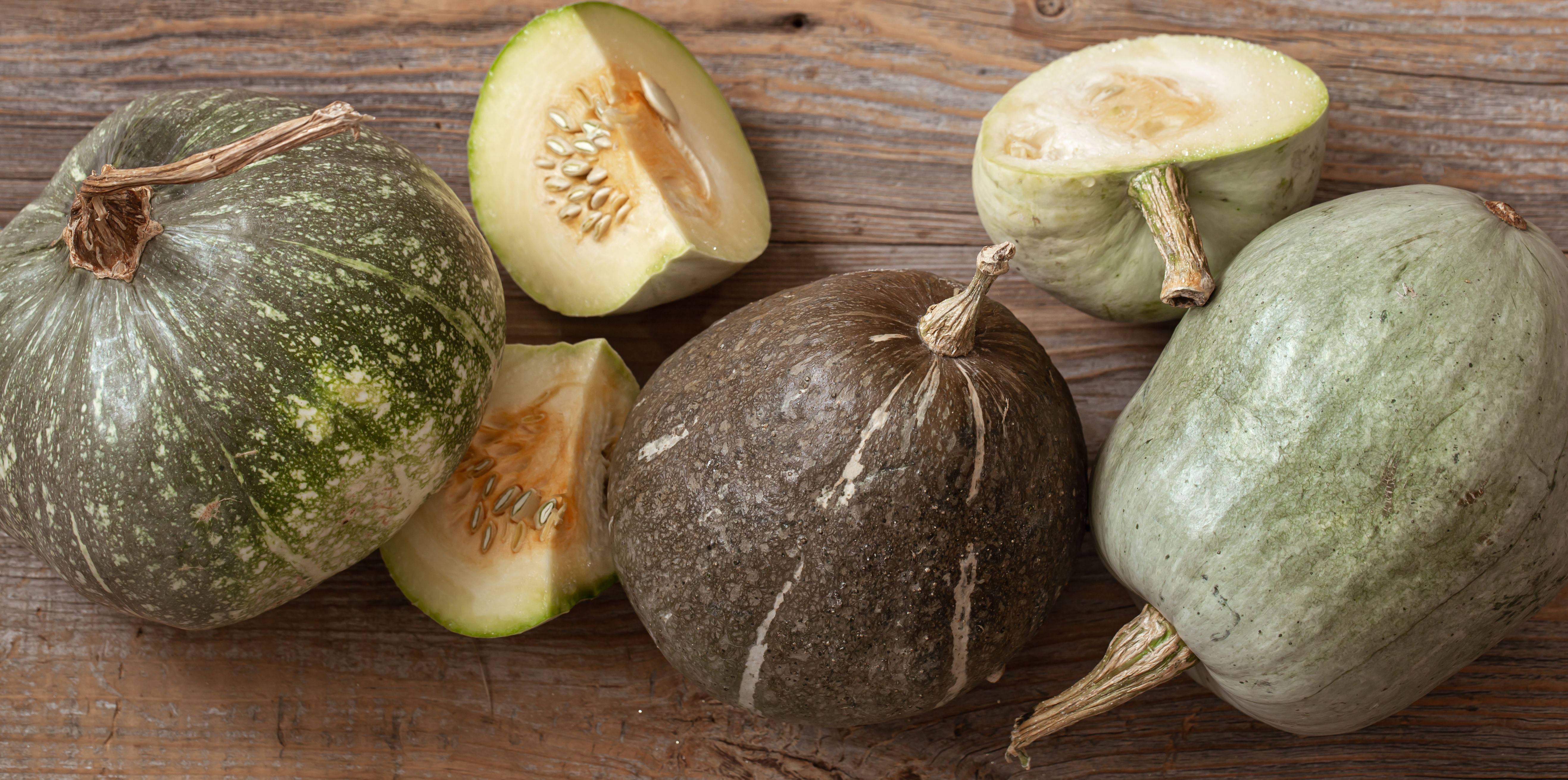
In this week's CSA a new squash name caught our eye. Tetsukabuto Squash from Long Walk Farm in Council Bluffs, IA. Tetsukabuto is pronounced roughly as teh-tsu-kah-boo-toh and means Iron Helmet in Japanese. The Tetsukabuto is a hybrid winter squash between Kabocha and Butternut squash. Today we are going to learn all about the Tetsukabuto squash and how it can be used this fine New Year!
Description/Taste
Tetsukabuto squash is small to medium in size, averaging 4-6 pounds, and is almost perfectly round in shape except for a small scar at the blossom end. The rind is knobby, mottled, covered in shallow, lengthwise grooves, and is dark green appearing almost black. As the squash matures through the season, it may develop patches of orange and pale-yellow striping. The yellow-gold flesh is thick, dense, and firm and surrounds a small central cavity that holds no substantial seeds, but rather a network of densely packed fibers. Tetsukabuto squash has a relatively low moisture content and when cooked retains a firm texture with a pleasant starchy quality. The flesh is not quite as sweet as a butternut or Tahitian squash, but when roasted, its earthy flavor develops rich notes of hazelnut and browned butter.
Seasons/Availability
Tetsukabuto squash is available in the early fall through winter.
Current Facts
Tetsukabuto squash, botanically a cross between a Cucurbita moschata and a Cucurbita maxima, is the fruit of a hardy climbing vine that is a member of the Cucurbitaceae family along with pumpkins and gourds. Also known as the Japanese pumpkin, Tetsukabuto squash was developed in Japan to be resistant to insects and disease, produce high yields, and have excellent storage capabilities. Tetsukabuto squash is often used as rootstock and does not produce any seeds that can be used to cultivate fruit. It must be planted near a regular butternut, buttercup, hubbard, kabocha type for pollination.
Nutritional Value
Tetsukabuto squash contains vitamins A and C, potassium, and fiber.
Applications
Tetsukabuto squash is best suited for cooked applications such as roasting, baking, and boiling. It is commonly used in long, slow simmering curries, soups, casseroles, and stews, but it is also quite versatile and can be sliced thinly and quickly fried in Japanese tempuras or pickled. Tetsukabuto squash can be sliced, roasted, and served as a simple side dish along with winter vegetables and meats such as poultry, pork, or beef. Its sweet flesh can also be used in desserts such as pies, tarts, bread pudding, cakes, and other baked goods. Tetsukabuto squash pairs well with allspice, cinnamon, clove, nutmeg, sage, tarragon, thyme, rosemary, chile flake, ginger, curry, honey, maple syrup, brown sugar, olives, onion, orange, pear, apple, pecan, hazelnut, bacon, pork, duck, coconut milk, parmesan cheese, mascarpone, goat cheese, cream, sherry vinegar and balsamic vinegar. It will keep 3-6 months when stored whole in a cool and dry place.
Ethnic/Cultural Info
Tetsukabuto squash has been extremely popular in Brazil since its introduction in the early 1960s. Known as Abóbora Japonesa or Japanese squash in Portuguese, Tetsukabuto squash was first cultivated in the state of Minas Gerais, Brazil and this state is still one of the largest producers of the squash today. Tetsukabuto squash is commonly used in soups, salads, and dishes served with meat and collard greens in Brazil, and it is also canned and used in products such as baby food. Fresh squash is sold in slices at markets so consumers can see the deep beautiful orange flesh.
Geography/History
Tetsukabuto squash is a hybrid winter variety that was developed in Japan. Popular squashes such as the buttercup, hubbard, and kabocha were prized for their culinary uses but were prone to vine borers and striped cucumber beetles. With the intention of creating a more resistant variety, a Cucurbita maxima and a Cucurbita moschata were crossed resulting in several sturdier cultivars including the Tetsukabuto. Today Tetsukabuto squash can be found at farmers markets, online seed catalogs, and specialty grocers in South America and Asia. It is not commonly grown in the United States, but if found, it is predominately grown in home gardens.
Recipe: Tetsukabuto Squash Snack Cake
by Wild Flower Bakery
Ingredients: 2 cups (240g) whole grain pastry flour (or AP flour), 1 tsp baking soda, ½ tsp baking powder, ½ tsp salt, 1 tsp cinnamon, ½ tsp ginger, ¼ tsp clove, 1 cup (198g) sugar, ½ cup (109g) vegetable oil, 2 eggs, 1 tsp vanilla, 1 ½ cups Tetsukabuto squash puree, 3 Tablespoon milk
Directions: Heat oven to 350F. Grease and flour a 9” x 5” loaf pan. In a medium bowl, whisk together flour, baking soda, baking powder, salt. In another bowl, whisk together sugar, eggs, milk and vanilla until well incorporated and lighter in color. Slowly drizzle in oil while whisking quickly. Gently fold in squash puree. Sift dry ingredients over wet ingredients and gradually fold in until no dry streaks remain. Evenly pour batter into prepared pan. Bake until a toothpick inserted in the center comes out almost clean, 50-60 minutes. Transfer loaf pan to a wire rack and let cool for five minutes. Run a knife along edges and invert onto a plate, then let cool completely, topside up, on a rack. Enjoy! https://www.eatwintervegetables.com/snack-cake